
Meet Dr. Carmencita Padilla, National Scientist in the Philippines

Carmencita D. Padilla, MD, MAHPS
Dr. Carmencita Padilla is Professor Emeritus at the College of Medicine at the University of the Philippines, Manila. She is also the Founding Director of the Institute of Human Genetics and Newborn Screening Reference Center at the National Institutes of Health. Dr. Padilla is responsible for the Newborn Screening Act of 2004 (RA 9288) and the Rare Disease Act of 2016 (RA 10747). Accounting for her contributions to science, the President of the Philippines recently honored her with the title of National Scientist, National Academy of Science and Technology. She is working closely with MiracleFeet’s partner in the Philippines, PNGOC, to implement a newborn screening program that will help identify birth anomalies early.
We sat down with Dr. Padilla recently to hear about her research on birth defects and how newborn screening could positively impact the early detection of clubfoot in the Philippines.
Q: Dr. Padilla, you are a renowned global expert and a leading advocate for screening newborns for treatable clinical conditions. What is newborn screening and why it is important for low- and middle-income countries (LMICs) to invest in newborn screening programs?
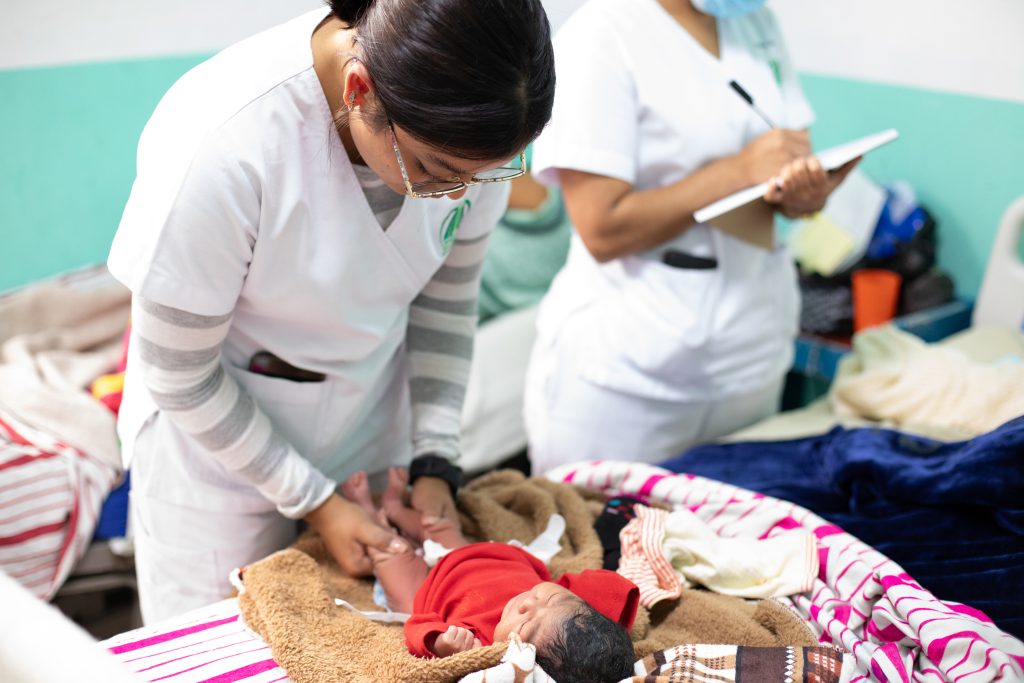
A: Newborn screening is recognized worldwide as an essential public health program for early detection of conditions that cause death or mental and physical disabilities. The process includes getting a few drops of blood from the heel of the baby as well as a visual inspection. It is important that disorders are screened at birth so that treatment can begin early, and so associated disabilities may be minimized.
Because LMICs have limited resources, it is crucial to invest in health services that have a good return on investment. Newborn screening programs offer significant health, social, and economic benefits to families and society that well outweigh the expenses compared to a do-nothing approach.
Q: We understand that traditionally newborn screening (NBS) has been used for conditions that are not visible at birth (e.g., blood disorders), how is the scope of NBS changing so that visible congenital anomalies, such as clubfoot, can be included as part of newborn screening programs?
A: The new WHO definition of newborn screening goes beyond screening for blood disorders. It covers screening vision, hearing, congenital heart disease, and physical defects like oral clefts, neural tube defects, abdominal wall defects, and clubfoot.
Q. Please share some specifics of the expanded newborn screening initiative you are leading in the Philippines and how it will impact the lives of babies born with clubfoot.
A: Newborn screening in the Philippines started in 1996 with five conditions – congenital hypothyroidism, congenital adrenal hyperplasia, phenylketonuria, homocystinuria, and galactosemia. In 2014 we expanded the number of screens to 29 conditions from a dried bloodspot. We have successfully implemented this in almost 7,200 hospitals and birthing centers across the 7,600+ islands of the Philippines archipelago. This was possible with the passage of the Newborn Screening Law in 2004 or Republic Act 9288 which defines the role of the Department of Health as the lead agency in partnership with the Newborn Screening Reference Center of the National Institutes of Health; coverage by the national health social insurance; and compliance with newborn screening as a requirement for facility licensure and accreditation.
With this network across the country, we are now expanding newborn screening to cover physical birth defects – oral clefts, neural tube defects, abdominal wall defects, and clubfoot.


For clubfoot screening, we invited a retired orthopedic surgeon, Dr. Juanito Javier, to lead national implementation of clubfoot screening as part of our national comprehensive newborn screening program.
We are fortunate in the Philippines to have MiracleFeet pioneer clubfoot screening and management in the country. We hope this partnership will help accelerate clubfoot screening in the Philippines. A pilot will be conducted in 200 hospitals and birthing centers this year to try out the referral network that has been prepared by the team of Dr. Javier.
We greatly appreciate the ongoing assistance donors and program partners like MiracleFeet. Your support makes it possible to provide not only clubfoot treatment, but also things like custom shoes to patients and families who could otherwise not afford it.


Your generosity
can transform a child’s life. A $500 treatment opens doors and unlocks opportunity for a child born with clubfoot.
Give Today