A New Era for Clubfoot Care in the Philippines: Early Detection, Access, and Integration
By Chi Vallido and Emmanuel Otoo
Birth defects, also known as congenital anomalies, are structural or functional abnormalities that occur during intrauterine life. These conditions may be identified prenatally, at birth, or later in life. Globally, they affect an estimated 8 million newborns annually—approximately 6% of all births. Given their lifelong impact on affected individuals and families, early identification and intervention are essential to improve outcomes and reduce long-term care costs.
In recognition of this, the Department of Health (DOH) of the Philippines has prioritized the development of a national surveillance and intervention mechanism. The Institute of Human Genetics at the National Institutes of Health, University of the Philippines Manila, has been designated to lead the National Birth Defects Surveillance Project. The initiative involves data collection, monitoring, and developing a referral system to ensure affected newborns receive timely care.


At the core of this initiative is the Expanded Newborn Screening Program, housed at the National Institutes of Health and endorsed and partially funded by the DOH. This expansion reflects a significant step forward in the country’s commitment to addressing congenital anomalies comprehensively.
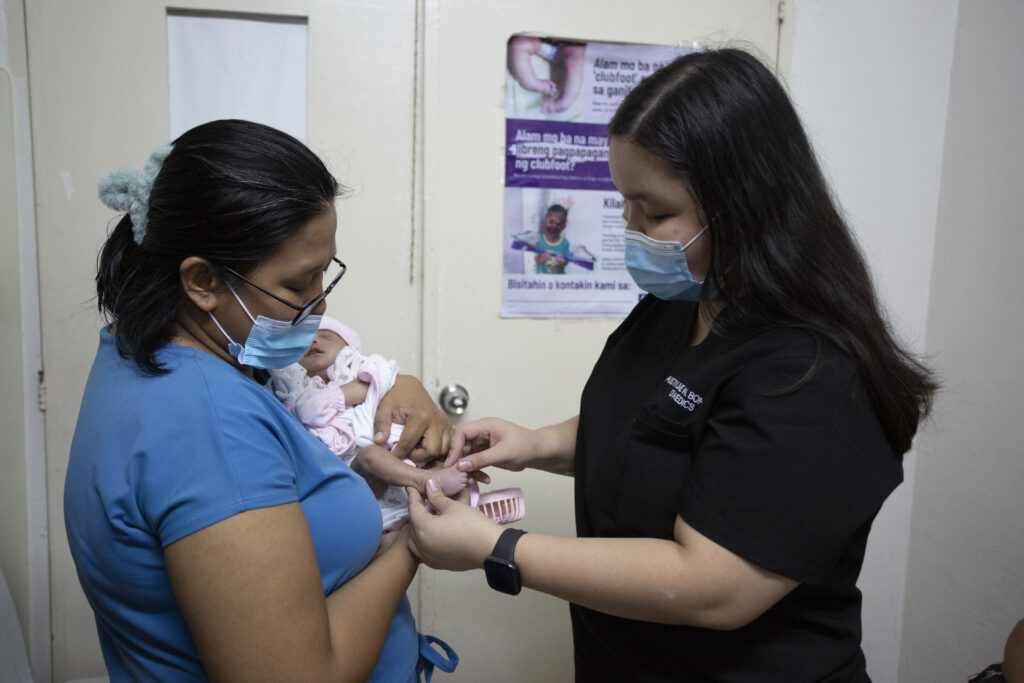
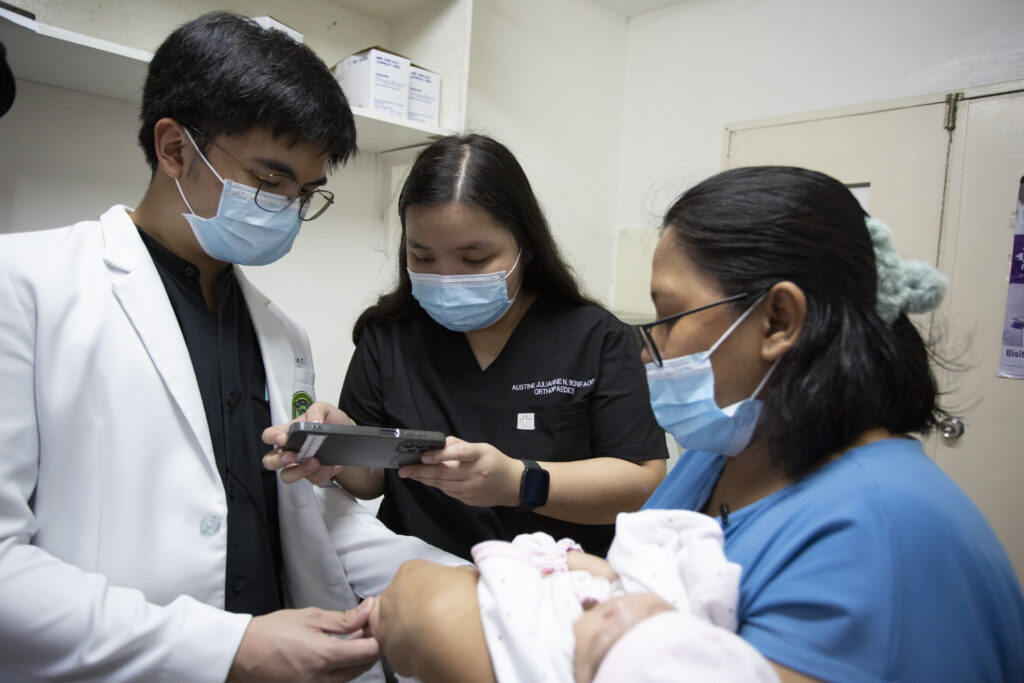
Early data from the birth defect surveillance shows that over 30% of infants screened for clubfoot also present with at least one additional congenital anomaly. Previously, there was no system-wide approach to detect clubfoot at birth. Now, more than 90 birthing centers across the country are training frontline health workers—midwives, nurses, physiotherapists, and surgeons—to recognize signs of clubfoot early and refer families to care immediately. This national screening initiative is changing the policy environment and also playing a key role in raising awareness and improving access to care for other birth defects such as cleft lip/palate, abdominal wall defects, and spina bifida helping to strengthen early intervention and support for affected families across the board.
This expanded approach generates several major benefits for clubfoot care including:
- Reducing treatment cost: by identifying conditions such as clubfoot at birth, children can be referred earlier, reducing the need for more complex and costly interventions later in life.
- Improving key performance indicators (KPIs): this initiative is expected to significantly increase the number of children enrolled in treatment before 12 months of age—a key metric for MiracleFeet and our partners.
- Driving early detection and referral (EDR): this marks a significant milestone in MiracleFeet’s EDR efforts in the Philippines, integrating physical deformity screening into the national health system for the first time.
- Shifting care responsibility: once the screening initiative shows a proven record of success, care responsibilities will shift to health practitioners handling newborn screening. Screenings will be covered by the ‘Newborn Screening Fee’ and treatment will be covered by PhilHealth.
- System approach: most importantly, this initiative supports a gradual transition of clubfoot care responsibility from MiracleFeet and other external development partners to DOH and more stakeholders, especially health practitioners who manage and treat birth defects.
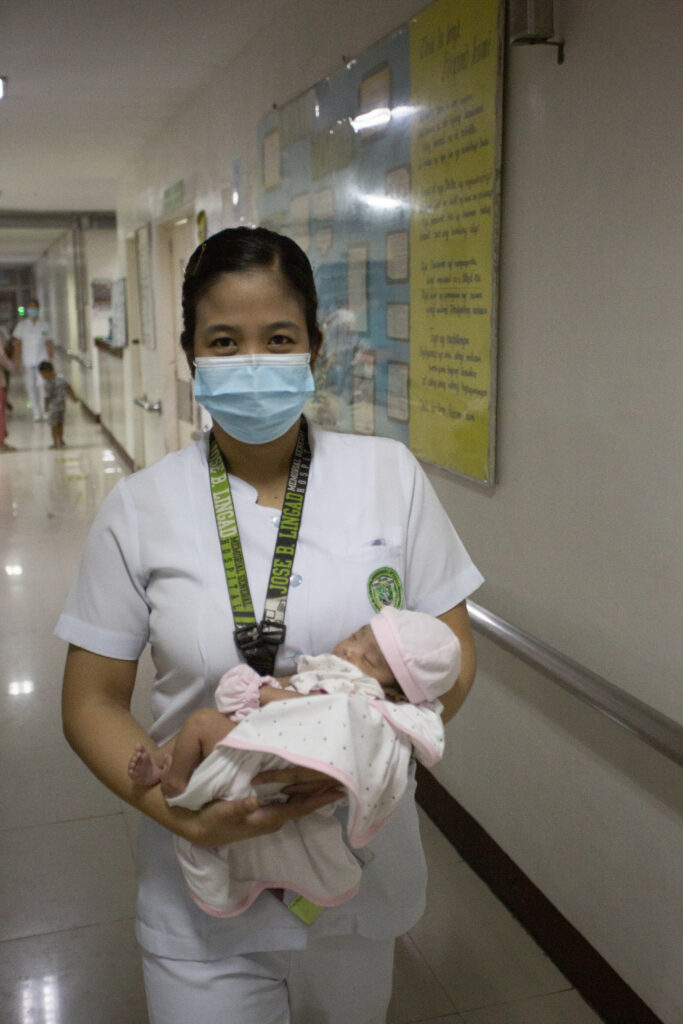
On March 15, 2025, the National Birth Defect Surveillance Project under the Expanded Newborn Screening Program was launched in 98 pilot clinics and hospitals in three regions of the country including Metro Manila. MiracleFeet’s local partner PNGOC has communicated with these facilities with information on clubfoot referral clinics. In less than two months since it was launched, 21 newborns with clubfoot have been detected. Fifteen infants (71%) without complications and under critical care have been referred to a clubfoot treatment facility including MiracleFeet-PNGOC partner clinics.
The second major advancement is a policy change by PhilHealth, the national health insurer. Previously, families could only receive reimbursement for one clubfoot-related visit every 90 days. Given that effective treatment typically involves multiple casting sessions in the first few months, this rule created a financial barrier for many. In October 2024, after sustained advocacy from patient rights advocates, local NGOs, MiracleFeet, and local partner PNGOC, PhilHealth revised the rule—now allowing reimbursement for multiple visits during the initial treatment window.
Together, these changes represent more than just operational wins—they signal a systemic shift toward integration and sustainability and pave the way for MiracleFeet to evolve—shifting support to providing training, braces, transport subsidies, and parent education.
This moment also reflects a broader public health vision. By embedding congenital anomaly screening into national systems, the Philippines is addressing root causes of inequity, enabling early intervention, and reducing the social and financial toll of preventable disability.
These changes are not just a success for one condition in one country—they are a blueprint showing what’s possible when public health leadership, dedicated advocacy, and proven solutions come together.
The work isn’t finished. Expanding training, strengthening awareness, and pushing for full national implementation remain priorities. But the direction is clear—and the future is hopeful. Every child deserves to walk every step toward integration moves us closer to that reality.