
World Health Organization’s new report: strengthening capacity for newborn screening, diagnosis and management of birth defects
Over the past two decades, remarkable progress in reducing child mortality, especially from infectious diseases, has reshaped global health priorities. As a result, birth defects now account for an increasing share of neonatal and under‑five deaths, as well as a substantial burden of lifelong disability, particularly in low– and middle-income countries (LMICs).
Addressing birth defects therefore is a critical component of equitable, people‑centered health systems and essential to achieving universal health coverage. Recognizing this urgency, the World Health Organization (WHO) convened technical consultations to support countries in improving and integrating newborn screening, diagnosis, treatment, and long-term care into routine services.
MiracleFeet welcomes this new report: Strengthening capacity for newborn screening, diagnosis and management of birth defects which provides a practical roadmap for LMICs to build and strengthen integrated systems for early screening, diagnosis, and lifelong care for children born with birth defects, including clubfoot.
Drawing on the experiences of countries implementing national programs at scale, the report highlights a clear lesson: screening alone is not enough. Early detection must be part of a comprehensive continuum of care linking timely diagnosis to effective treatment, structured follow‑up, rehabilitation services, and sustained support for families.
The WHO report outlines key actions countries can take to strengthen national systems:
- Integrate screening, diagnosis, and treatment into routine maternal and newborn care
- Prioritize feasible, high-impact conditions such as clubfoot
- Link early detection to accessible, quality care and long-term follow-up
- Strengthen data systems to track outcomes and improve services
- Secure sustainable financing and national ownership
- Expand rehabilitation, referral systems, and family support
- Leverage partnerships and community engagement
“No child should miss the chance for a healthy future because a congenital condition was not detected early enough,” said Dr. Tedros Adhanom Ghebreyesus, WHO Director-General. “Around the world, countries are showing that newborn screening for one or more conditions can save lives, prevent disability, and give a newborn the best opportunity to fulfil her or his potential.”
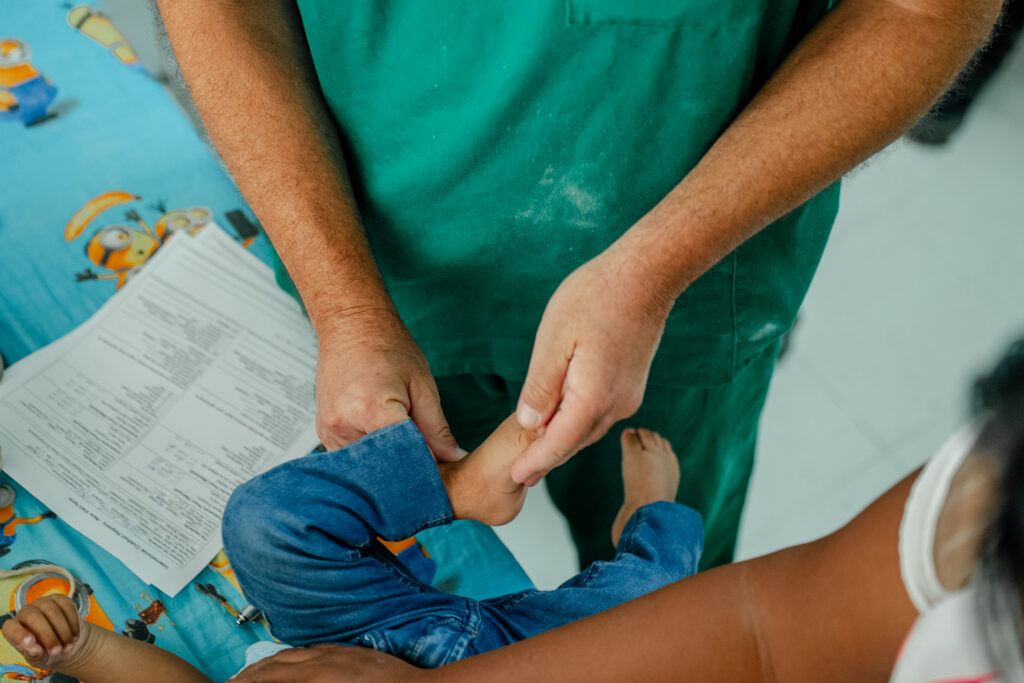
Each year, thousands of children benefit from programs supported by MiracleFeet across nearly 40 countries, demonstrating that clubfoot treatment is low-cost, scalable, and transformative when delivered early and consistently.
“As a member of the Global Action for Congenital Conditions, MiracleFeet is proud to stand alongside organizations working across many birth defects in pursuit of a shared goal: ensuring that every child has access to timely diagnosis, treatment, and care,” said Daphne de Souza Lima Sorensen, MiracleFeet’s CEO. “From clubfoot to congenital heart disease to cleft conditions, countries are demonstrating that early detection and treatment can be integrated into national health systems and bring life-changing care to millions more children.”
Countries such as Uganda, Bangladesh, and the Philippines are already showing what is possible. By embedding clubfoot screening and treatment into national health systems, they are reducing disability while increasing mobility, independence, and inclusion.
This report reflects the collective effort of civil society, clinicians, and governments coming together with a shared goal: to improve outcomes for children with birth defects. With the right investments and coordination, millions of children can receive the care they need to survive and thrive. The WHO report is a remarkable and clear opportunity to accelerate progress.
Learn more at the July 7 webinar hosted by the Global Action for Congenital Conditions (GACC). Register here.


