
Carolina and Zoer: A Mother’s Journey of Courage, Sacrifice, and Hope
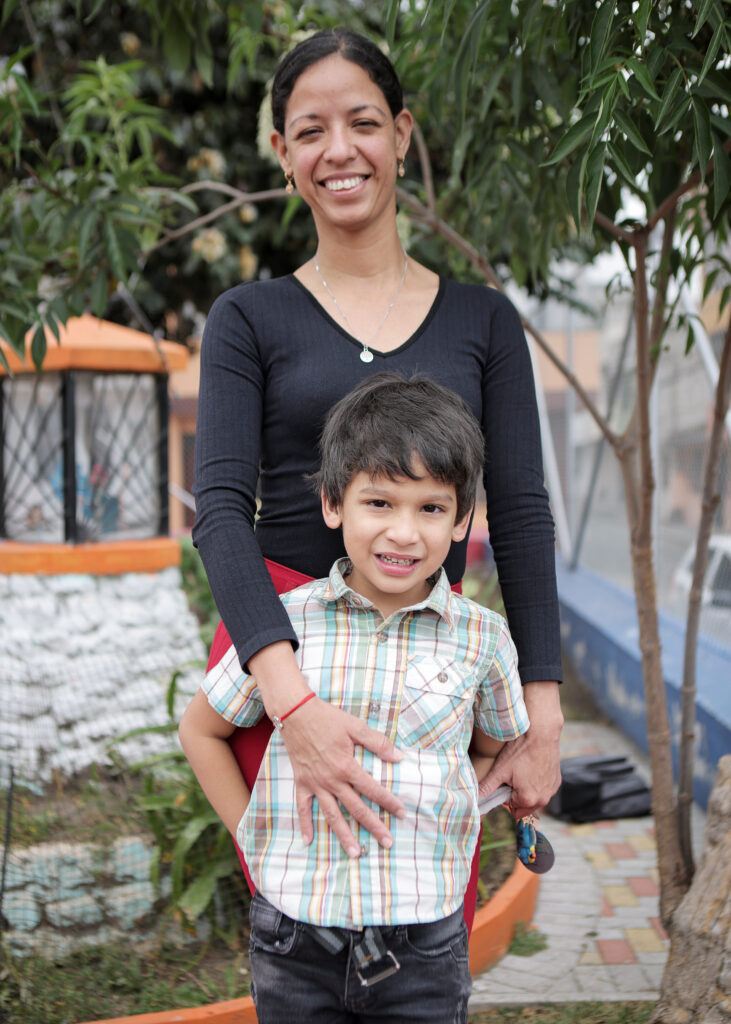
In a modest apartment in Quito, Ecuador, 38-year-old Carolina Hernández sits with her son, Zoer—a bright, energetic six-year-old whose laughter fills the room. Looking at him now, running through the house and sharing stories about his school friends, it’s hard to imagine the long, painful road that brought them here. Yet their grueling journey crossing two countries on foot is a testament to the strength of a mother’s love.
A Life Uprooted
“I never imagined leaving Venezuela,” Carolina says. “I had my life there. I studied computer engineering, I had my family, my friends. We had traditions that meant so much—Carnivals, Christmases, Easters with the neighbors. Even through the economic hardship, we held on. ”
But the situation in Venezuela spiraled. As the economy collapsed, basic necessities vanished. “People were fighting in line for a kilo of rice,” she recalls. “We were surviving by reselling food and doing whatever we could to make ends meet.”
Then, in the midst of the crisis, she discovered she was pregnant.
“I was scared. I didn’t expect it. I remember calling my mom and asking, ‘If I’m pregnant, will you support me?’ She said, ‘Of course I will.’ That changed everything for me.”
Her pregnancy was difficult—physically, emotionally, and logistically. She moved from one state to another for work, doing everything she could to try and set up a comfortable life for her baby. Then, at the birth, everything shifted again.
“The doctor handed me my baby and said, ‘Don’t be scared.’ I looked down and saw his foot twisted like an L. I had never seen or heard of clubfoot before.”
The diagnosis was a shock. “I kept thinking maybe I did something wrong—sat too long, worked too hard—but the doctor reassured me. ‘It’s a condition that can’t be seen in pregnancy,’ he said. ‘But it can be treated.’”
That was the beginning of her fight—not just for survival, but for her son’s mobility.


Stepping into the Unknown
Carolina immediately started seeking treatment. Zoer received casting when he was just a few weeks old, but inflation and instability made completing treatment financially impossible. “The treatment cost 10 million bolivars [roughly $124,000 USD], and the price kept going up every week. We couldn’t keep up. We couldn’t do it.”
As Venezuela’s healthcare system collapsed, Carolina faced a heartbreaking reality: Zoer’s only hope was to leave.
“I told my sister in Colombia, ‘We have to go. There’s nothing here. No doctors. No treatment for my mother or my son.’”
With her baby strapped to her back and her elderly mother at her side, Carolina set out—on foot. They crossed two countries in 11 days, sleeping outside, enduring the cold, surviving on faith and the kindness of strangers. “We wrapped Zoer in cardboard to keep him warm,” she recalls. “I got sick. We saw families who didn’t survive the journey—frozen in each other’s arms. I’ll never forget it. That could’ve been us.”
When they reached Quito, Carolina was exhausted—but determined.
“I had one mission: find help for Zoer.”
Through a network of fellow migrants, social workers, and a chance encounter at a nail salon, she was referred to Fundación Hermano Miguel, a MiracleFeet-supported clinic.
“I arrived and said, ‘If you’re going to ask me for money, I don’t have any. But my son needs help.’ And Dr. Lorena looked at me and said, ‘Let me see him. Tell me your story.’ That’s when everything changed.”
Fresh Starts and New Chances
Zoer was already a year old and his foot had relapsed, twisted back into its original shape. Starting treatment again from the beginning, especially now that Zoar was more mobile and vocal, was difficult. “The casts were hard for him. He cried so much. But I could see the difference, day by day,” recalls Carolina.
The family never missed a single appointment. Carolina, her mother, or her cousin made sure Zoer was always there on time. After a few weeks of casting came the tenotomy—a small surgical procedure to release the tight tendon. “It was hard to watch, but it worked,” she says, wincing. Slowly, Zoer began to heal. He adapted to the brace. He started walking, running—and then one day, he started school.
“His first day, I was so nervous,” Carolina says. “I didn’t know how he’d be treated, being Venezuelan. But he came home and said, ‘Mom, I have five friends. They’re all Ecuadorian.’ That made me so proud.”


Now in first grade, Zoer is thriving. He plays, he learns, and he dreams. “At his last checkup, the doctor said, ‘His foot is perfect. He can play soccer, jump, do anything.’ That moment—those words—made all the pain, the fear, the struggle worth it.”
Carolina still faces challenges. She’s working toward permanent residency in Ecuador. She continues to write about her experiences on her blog, Migrant and Fighting Moms, and shares stories with her uncle in Venezuela, who is turning them into a book. “Writing helps me process everything we went through. I want people to understand that migrants aren’t here to be a burden—we’re here to survive, to build, to contribute.”
Looking back, she says, “If I hadn’t had Zoer, I would’ve never left. But because of him, I found strength I didn’t know I had. Everything I did was for him.”


On Mother’s Day, we honor mothers like Carolina—who cross borders, who sacrifice everything, who never give up.
Thanks to your support, Zoer got the treatment he needed. And because one mother refused to accept a future of disability, her son now walks, runs, and chases his dreams.
Give today. Help more children like Zoer take their first steps into a better future.
